Skip to content
CoursesTrack
1 free lesson20 simulations

Building AI Agents: Harness Engineering

When the model is allowed to do things, not only to answer.

Level
Advanced
Modules
6
Lessons
20
Total time
5h 48m
Building AI Agents: Harness Engineering
Tools you'll use
  • Python
  • Claude
  • OpenAI
  • FastAPI

After this track you can

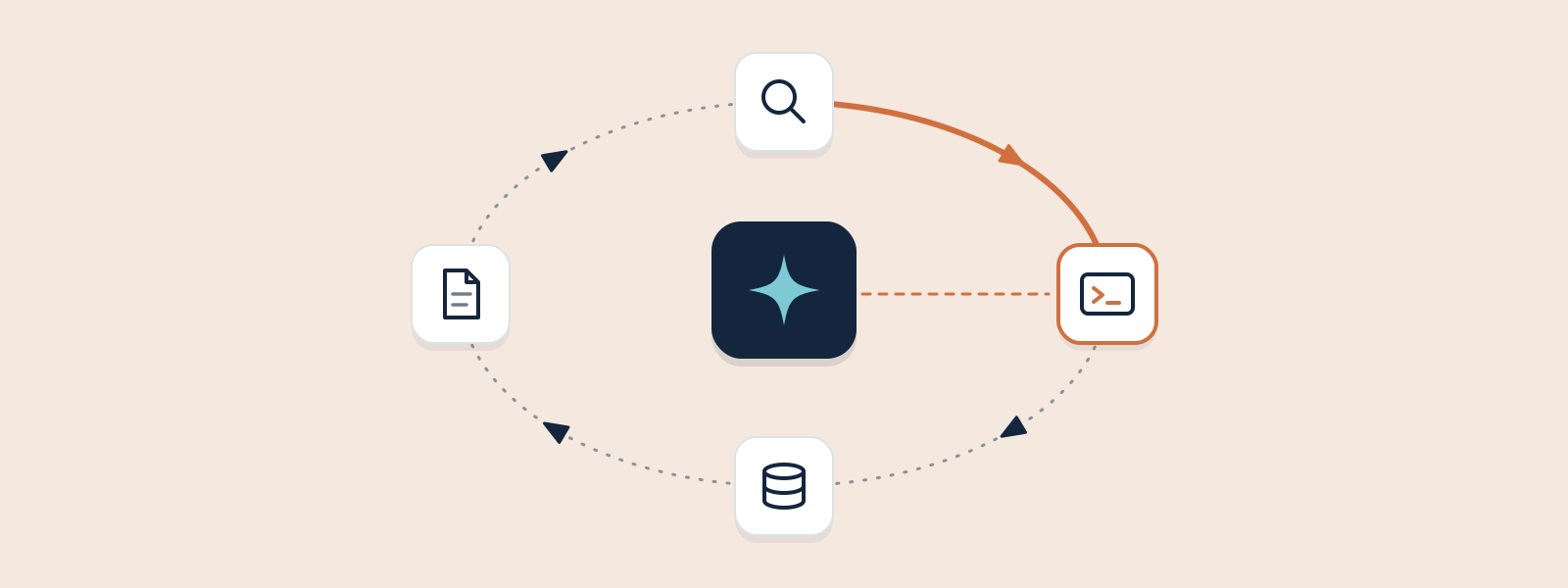
  • Explain the agent loop: think, call a tool, observe, repeat
  • Design tools and a harness whose behaviour can be audited
  • Tell an action that may run from one that needs confirmation
  • Evaluate an agent before it touches a real system

An agent is a model inside a harness: a loop, tools, memory and limits. This track is about the harness — how an agent loop runs step by step, designing tools a model can use correctly, managing a context that keeps growing, multi-agent systems, and the part most often skipped: guardrails. An agent allowed to call an API is a system that can be wrong with real consequences.

Read a free lesson: What Makes Something an Agent

What you'll learn, module by module

6 modules · 20 lessons

Every module and lesson in this track. Lessons marked free are open to everyone; the rest open once you own the track.

Every lesson in this track, with summaries
  1. 01

    What an agent is, what a harness is, and when a problem actually needs an agent — and when it does not.

    1 free lesson4 lessons1h 13m4 simulations
    1. 1What Makes Something an AgentFree
    2. 2Designing Tools for Agents
    3. 3Workflows versus Agents
    4. 4Build an Agent from Scratch
  2. 02

    Context, permissions, sandboxing, errors and tracing — everything that makes an agent trustworthy outside a demo.

    4 lessons1h 2m5 simulations
    1. 1Context Management in Agent Loops
    2. 2Permissions and Sandboxing
    3. 3Error Handling and Recovery
    4. 4Observability and Tracing
  3. 03

    Connecting agents to APIs, databases and files — with MCP as the standard interface.

    3 lessons50 min2 simulations
    1. 1Tool Interfaces That Work
    2. 2The Model Context Protocol (MCP)
    3. 3Agents on Databases and APIs
  4. 04

    Orchestrators and workers, subagents and context isolation — when splitting the work helps, and when it hurts.

    3 lessons42 min3 simulations
    1. 1The Orchestrator-Worker Pattern
    2. 2Subagents and Context Isolation
    3. 3When Multi-Agent Hurts
  5. 05

    Task-level evals, trajectory analysis, and reliability and cost metrics.

    3 lessons46 min3 simulations
    1. 1Task-Level Evals
    2. 2Reading Agent Trajectories
    3. 3Cost and Reliability Metrics
  6. 06

    Human-in-the-loop, security, and a capstone: an agent that completes a real task safely.

    3 lessons1h 15m3 simulations
    1. 1Human-in-the-Loop
    2. 2Agent Security and Prompt Injection
    3. 3Capstone: a Research Agent

Try a simulation from this track

The real one, from a lesson — it runs in your browser. No account needed.

Save with a career-path bundle

This track is part of a larger path. Buy the whole path as a bundle and every track in it costs 40% less.

Career-path bundle40% off

AI Engineer Career Path

  1. 1Python for Data Science
  2. 2Introduction to Deep Learning & Neural Networks
  3. 3LLMs, Prompt Engineering & Context Engineering
  4. 4Building AI Agents: Harness Engineering
  5. 5MLOps: Deploying Machine Learning & Deep Learning Models
  6. 6Computer Vision with Deep Learning
  7. 7Natural Language Processing (NLP)
Lifetime access
$9
Buy